There is an inherent problem with prepositionally situating the Void in language. The same problem applies to the Tao, or to God, or to any other concept that signifies “Both, and yet Neither.” These concepts “transcend” (not the right verb) duality, while also containing them. Such paradoxical logic breaks down when using English prepositions, which are based off of literal (non-paradoxical) spatial relations.
Let’s take the Tao as an example. Do we say the Tao is “outside” of duality? “Beyond” duality? All these prepositions are spatial, and as such are relational, and as such re-posit the very duality they aim to escape. If the Tao is “outside of” duality, then we’ve prepositionally established an inside/outside binary, thus trapping us back in the system we were trying to exit. This would be incorrect thinking. So… what prepositions should we use?
A simple allegory to help explain this problematic:
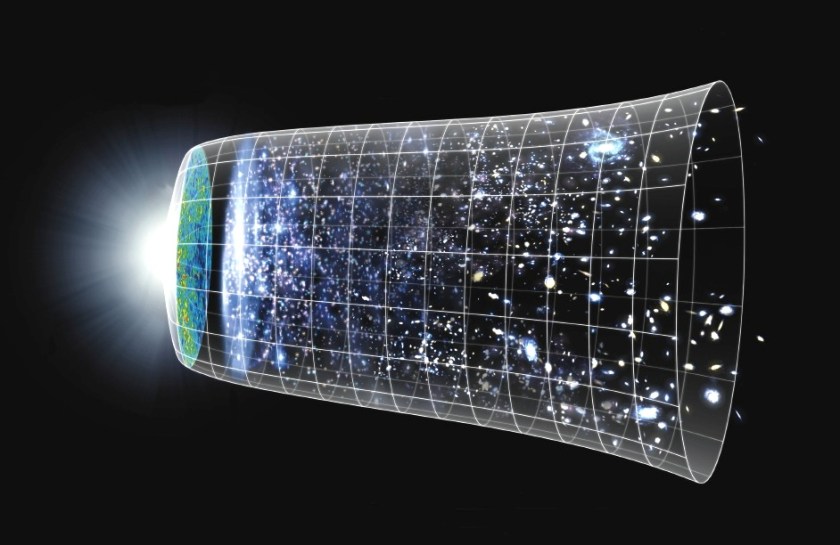
Question: “What was there before the Big Bang?”
Answer: “The very concept of time began with the Big Bang, and as such, there simply is no “before” before the Big Bang. The concept of before simply doesn’t apply here.”
This concept of “non-before” is analogous to how the Tao is situated to duality. Dualism begins with yin/yang, so the realm of Tao both doesn’t participate in dualism, and since yin/yang are just distinctions within Tao, the realm of Tao also contains dualism – it both doesn’t participate and contains. It is “Both, and yet Neither.” Perhaps this is our best “preposition.”
 Live The Questions